
Real estate due diligence is one of the key steps in any major real estate transaction.
Whether it is the acquisition of a large housing project, the purchase of an individual apartment building, a plot of land for construction or an investment in a housing portfolio, without thorough due diligence, even an experienced fund or developer analyst or an individual investor can easily overlook major risks - legal, technical, but also market risks.
Previously, due diligence was the domain of lawyers and technical specialists. Today, however, it is increasingly moving into the realm of data.
Thanks to modern analytical tools such as Flat Zone Studio, it is possible to complement legal and technical due diligence with detailed market and data analysis to show the true value and potential of a property.
Real estate due diligence means a systematic examination of a property before its purchase, financing or renovation.
The aim is to uncover risks, confirm value and verify that the parameters of the transaction correspond to the reality or potential of the market - i.e. to find out comprehensive and complete information about the property.
In practice, there are usually four main areas of screening:
The basis is to verify who is the actual owner, whether there are any easements, pledges or other legal obligations on the property. Furthermore, an assessment of the broader relationships and connections with the surrounding area, owners, infrastructure and protection of the area.
This usually includes a review of the site plan and any regulatory restrictions.
Digital tools that work with Cadastre data now make it possible to link this information to map and parcel data, making the whole process faster and more accurate.
👉 In Flat Zone Studio you can easily evaluate the area in a detailed map base linked to the Land Registry data.

The technical part of the screening assesses the actual condition of the area or property. In the case of land, its buildability, readiness for construction and overall usability. In the case of buildings or a portfolio of dwellings, the construction, technical equipment, energy performance or the necessary investment in repairs.
Sustainability, building certification and long-term operational efficiency are also playing an increasing role.
This part determines whether the declared purchase price corresponds to the market reality in relation to the planned project.
Investors check the yield potential, the price level of comparable projects and the market activity in a given location.
👉 In Flat Zone Studio you can easily evaluate real transactions, price trends and market activity in a specific location, in graphical or data form.
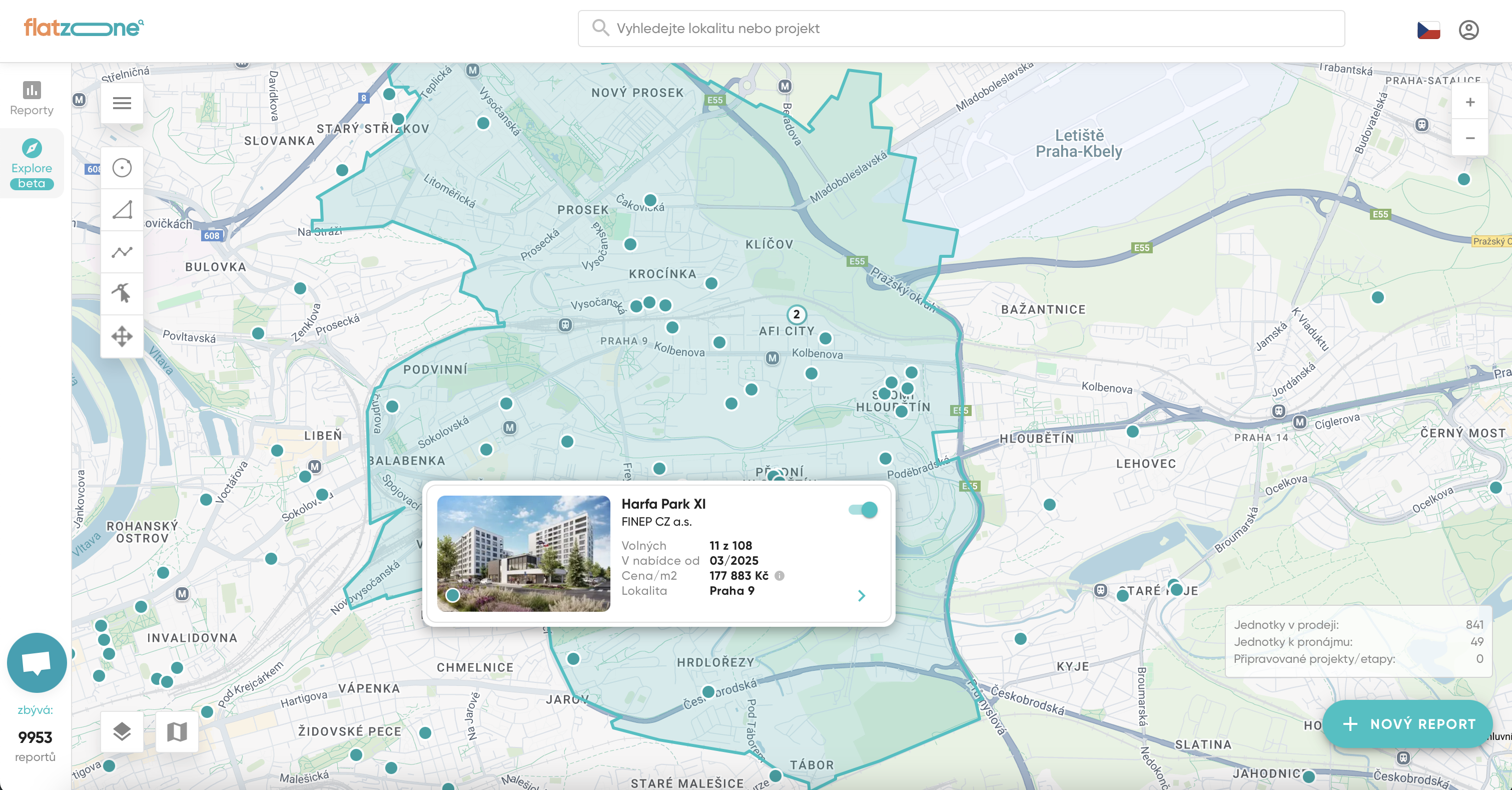
The user can filter apartments by type, size or age and instantly compare their sale prices with the planned acquisition.
This gives a clear picture of whether the purchase price is reasonable and what return can realistically be expected.

One of the most frequently overlooked topics in acquisition is the impact of zoning on the future value of the property.
A change in the zoning plan, planned traffic junctions or new construction in the area can significantly affect both price and demand.
👉 Flat Zone Studio shows not only the current offer of new buildings, but also planned development projects in the area.
The investor can thus see what development is expected in the area and whether new competition - or, conversely, an investment opportunity - is on the way.

Data analysis connects all the previous areas and helps to make decisions based on facts, not impressions.
It involves working with large datasets - from transactions to construction to socio-economic indicators.
This allows risks to be identified before legal and technical audits are triggered, saving time and costs.
Modern due diligence is a team discipline that brings together legal, technical and data experts.
The key to efficiency is centralisation of data and standardisation of outputs. Data tools such as Flat Zone Studio, which work with methodically processed and standardized data, help speed up and unify this process.
Investors get all key information and market benchmarks in one place - and can make decisions with greater certainty in a short time.
Due diligence is no longer just an audit formality. In a data-driven market, it is a key tool for risk mitigation, value confirmation and strategic decision-making.
Combining legal and technical due diligence with data analytics allows investors to anticipate, not just react.
👉 F ind out how Flat Zone data helps investors, developers, and financial institutions in their real estate due diligence. Schedule a demo.